
Progressive Jackpot Types Explained: Pool-Based, Slot, Linked, and Standalone Jackpot Systems
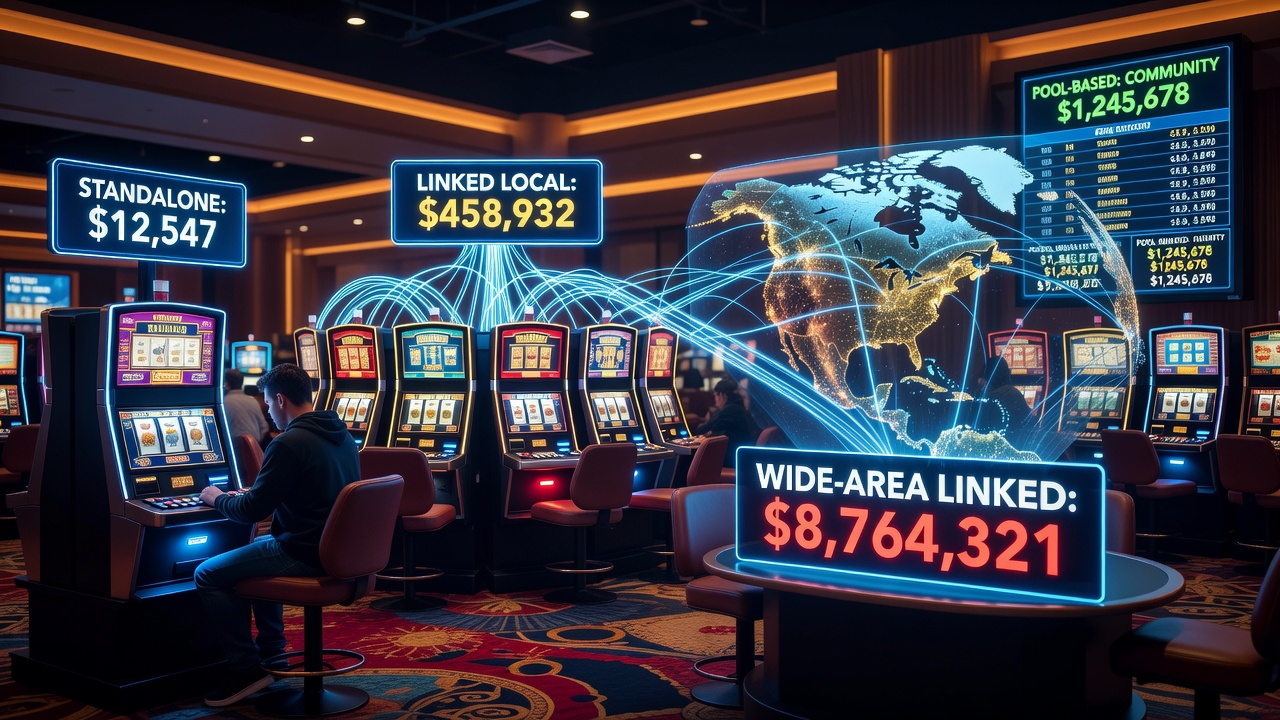
A single progressive jackpot machine sitting alone in a corner can build a prize worth thousands. Connect that same machine to fifty others across a dozen properties, and the math changes entirely - the ceiling disappears. This is the fundamental tension at the heart of every progressive jackpot: the trade-off between how many players feed a prize pool and how large that prize can realistically grow. Most players never stop to ask how the number on that flashing jackpot counter actually gets there.
Behind every rising number sits a specific mechanical and financial architecture, and that architecture determines everything from your realistic odds to how fast the prize refills after someone wins. Understanding the different progressive jackpot types isn't a matter of trivia - it directly affects strategy, bankroll planning, and expectations. For readers who want a structured breakdown before going further, this rundown of types of progressive jackpots lays out the core categories in plain terms. From there, the details matter: how contributions are pooled, whether machines are linked across a network, and whether a single cabinet operates entirely on its own.
This piece breaks down the four dominant systems - pool-based, slot-specific, linked, and standalone - explaining the mechanics, the trade-offs, and what each means for someone deciding where to place a bet.
What Makes a Jackpot "Progressive"?
A progressive jackpot differs from a fixed jackpot in one essential way: the prize grows over time instead of staying at a set amount. Every wager placed on a qualifying machine or game contributes a small percentage - often a fraction of a percent - into a growing prize pool. That pool keeps climbing until someone hits the winning combination or condition required to claim it, at which point the jackpot resets to a predetermined base value and starts climbing again.
The Contribution Mechanism
Every bet on a progressive-enabled game gets split into two portions: the amount that funds the base payout structure and the amount that feeds the jackpot pool. Operators calibrate this split carefully. Too small a contribution rate, and jackpots grow so slowly that they lose appeal. Too large, and the base game's payout percentage suffers, making it less attractive for regular play. This balancing act is the same across all progressive jackpot types, whether the pool draws from a single cabinet or thousands of machines worldwide.
Reset Values and Seed Amounts
When a progressive jackpot pays out, it doesn't drop to zero. It resets to a "seed" value - a baseline the operator has decided the jackpot should never fall below. This seed amount varies enormously depending on the system. A standalone machine might reset to a few hundred dollars, while a large linked network might reset to six or seven figures, since its seed reflects the enormous player base feeding it.
Pool-Based Progressive Jackpot Systems
A pool-based progressive jackpot draws its funding from a shared reservoir contributed to by multiple games or players, often without requiring those games to be identical or even from the same category. Instead of one machine building its own isolated prize, a percentage of wagers across an entire pool of eligible games funnels into one collective jackpot fund.
How the Shared Pool Is Structured
Operators typically define eligibility rules for which games contribute to and can trigger a given pool. A casino might designate twenty different slot titles as part of the same jackpot pool, meaning a player on any of those twenty games is contributing to - and eligible to win - the same growing prize. This differs from a single-game system because the pool's growth rate depends on aggregate activity across many titles rather than one.
Advantages for Operators and Players
The pool-based progressive jackpot model benefits operators because it spreads risk and volatility across a wider base, smoothing out the unpredictability of when a jackpot hits. For players, the appeal is variety: you can chase the same jackpot while switching between different game themes and mechanics, rather than being locked into one title.
- Faster jackpot growth due to combined wagering volume
- Flexibility to play different games while remaining eligible
- Reduced dependency on a single game's popularity to sustain growth
Slot Progressive Jackpots
Slot progressive jackpots represent the most familiar category to casual players - the version most people picture when they hear the word "progressive." These are jackpots tied specifically to slot machine mechanics, whether physical or digital, where a portion of every spin's wager feeds a growing prize tied to that machine or a defined group of machines.
In-Game Triggers and Bonus Rounds
Slot progressive jackpots are typically triggered one of two ways: through a specific symbol combination appearing on the reels, or through a random trigger mechanism unrelated to the visible outcome of the spin. Random triggers are common in networked systems because they allow the operator to control payout frequency independent of a machine's base game math.
Single-Machine vs. Multi-Machine Slot Jackpots
Not all slot progressives function the same way internally. Some are confined to one physical or virtual cabinet, meaning only bets placed on that exact machine contribute to and can win the jackpot. Others span a bank of similar or identical machines within the same venue or platform, blending individual play into a shared, faster-growing prize. The distinction matters because it directly affects how quickly the jackpot climbs and how often it's realistically won.
Linked Progressive Jackpots
Linked progressive jackpots take the pooling concept further by connecting machines across multiple locations - sometimes an entire region, sometimes an international network of platforms. Because the contributing player base is so much larger, linked systems tend to produce the largest jackpot figures in the industry.
Wide-Area Networks vs. Local Links
There are two general scales of linkage. Local links connect machines within a single property or a small cluster of venues, producing moderate but faster-cycling jackpots. Wide-area networks connect machines across many properties, states, or even countries, creating the massive, headline-grabbing prizes that can take months or years to hit. The trade-off is straightforward: bigger network, bigger prize, but proportionally lower odds of any individual player being the one who wins it.
Real-Time Synchronization Challenges
Keeping a linked progressive jackpot accurate across hundreds or thousands of machines requires constant real-time data synchronization. Every wager placed anywhere on the network has to be reflected in the displayed jackpot total almost instantly, and the system has to confirm and process a win without any lag that could cause disputes over the exact amount owed. This technical demand is one reason linked systems are more common with well-established operators who can maintain the necessary infrastructure.
Why Linked Jackpots Grow So Large
The math is simple: more contributing machines means more aggregate wagering volume flowing into the same pool every second. A network of a few thousand machines, each contributing a small percentage per spin, generates far more cumulative growth per hour than a single machine ever could - even one with a higher contribution rate.
Standalone Progressive Jackpots
Standalone progressive jackpots sit at the opposite end of the spectrum from linked systems. Here, one machine - and only that machine - funds and can win its own jackpot. There's no network, no shared pool, no dependency on activity elsewhere.
Isolated Growth and Predictability
Because a standalone progressive jackpot only grows from bets placed on that specific machine, its growth rate is directly tied to how much play that individual unit receives. This creates a more predictable, observable pattern - a regular player can track a specific machine's jackpot over days or weeks and get a reasonable sense of its typical cycle length.
Better Odds, Smaller Prizes
The core appeal of standalone systems is straightforward: with only one machine's players competing for the prize, the odds of winning are meaningfully better than on a linked network. The trade-off is scale - standalone jackpots rarely reach the eye-catching totals that wide-area linked systems produce, since they lack the massive contributing player base.
Who Standalone Systems Suit Best
Players who prioritize win frequency over jackpot size tend to gravitate toward standalone machines. They also appeal to operators running smaller venues, where connecting to a large external network isn't practical or cost-effective.
Comparing the Progressive Jackpot Types
Laying the four systems side by side clarifies the practical differences a player should weigh before choosing where to spend time and bankroll.
Jackpot Size vs. Winning Frequency
There's an inverse relationship running through all progressive jackpot types: the larger the potential prize, the lower the frequency of payouts, generally speaking. Standalone systems sit at one end with smaller but more frequent wins, while wide-area linked progressive jackpots sit at the other, with massive prizes that hit far less often.
Contribution Rates and Payout Structures
Each system also differs in how contribution percentages are set. Pool-based progressive jackpot structures often use moderate contribution rates spread across many games, slot progressive jackpots vary based on whether they're single-machine or multi-machine, and linked systems typically require higher aggregate contribution volume to justify their infrastructure costs.
Choosing Based on Player Goals
- Players chasing a life-changing prize gravitate toward linked progressive jackpots despite long odds
- Players wanting steady, moderate wins often prefer standalone progressive jackpots
- Players who enjoy variety across multiple games benefit most from pool-based systems
- Players focused purely on slot mechanics without cross-game complexity stick with dedicated slot progressive jackpots
Frequently Asked Questions
Which progressive jackpot type offers the best odds of winning?
Standalone progressive jackpots generally offer the best odds because only one machine's player base competes for the prize. The smaller pool of contributors means less competition, though the jackpot itself will typically be far smaller than what a linked network could produce.
Why do linked progressive jackpots sometimes take years to hit?
The trigger condition for a linked jackpot is often tied to a rare random event or symbol combination, and with an enormous network of contributing machines, the mathematical odds of any single spin producing that outcome remain low even as the total wagering volume across the network is high. The size of the prize pool grows faster than the probability of it being won.
Can a single machine be part of more than one progressive jackpot type?
Yes. It's common for a machine to contribute to a local jackpot pool while simultaneously being part of a broader linked network, effectively feeding two separate progressive systems from the same wagers. Operators structure this through separate contribution percentages allocated to each pool.
Do pool-based progressive jackpots pay out less per player than standalone jackpots?
Not necessarily. Pool-based systems can produce larger prizes than standalone machines because they draw from a wider base of games, but the odds of triggering the win are spread across more players. The average payout size depends on the specific pool's contribution rate and how many games feed into it.
How do I know what type of progressive jackpot I'm playing?
Most platforms disclose this information in the game's rules or information panel, specifying whether the jackpot is tied to a single machine, a local pool, or a wider network. Checking this before playing helps set realistic expectations about both prize size and winning frequency.
Is it true that linked progressive jackpots have worse base game payout rates?
Sometimes, yes. Because a portion of every wager is diverted to fund the shared jackpot pool across a wide network, the base game's return percentage can be slightly lower than an equivalent non-progressive or standalone version of the same game. This isn't universal, but it's a common trade-off worth checking in the game's payout information.