
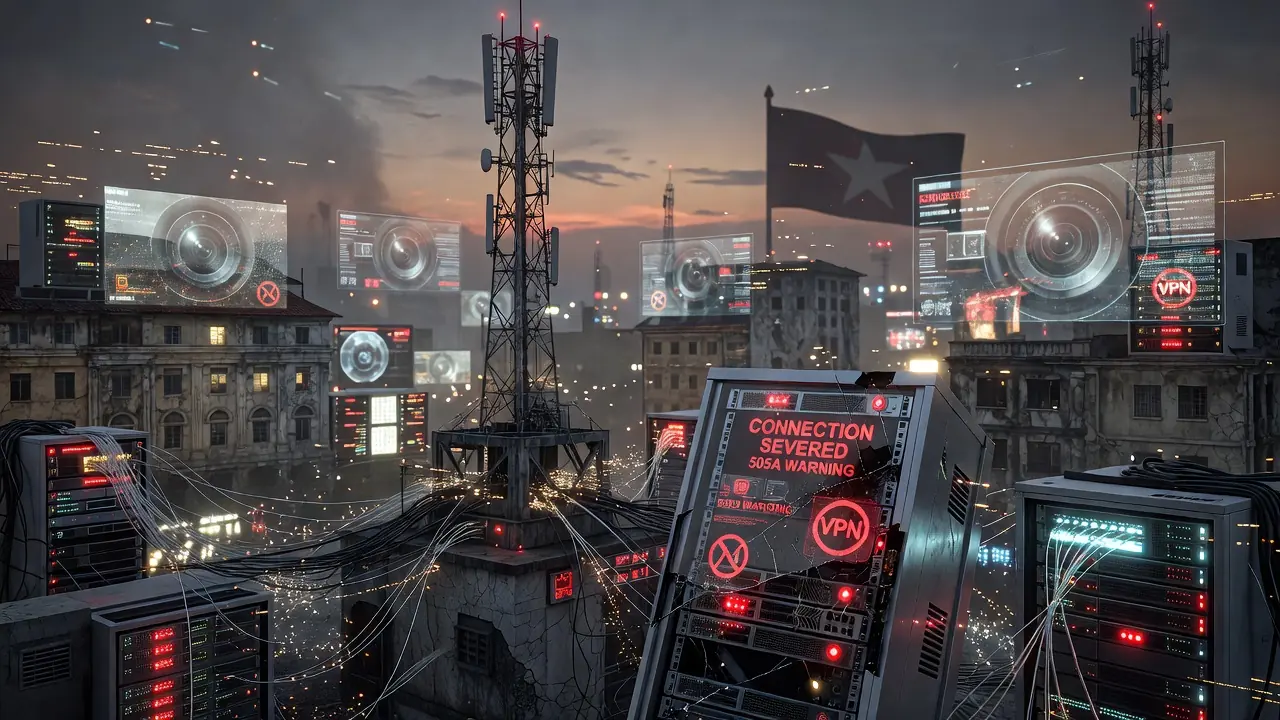
Myanmar has been named the most repressive environment for internet users on the planet, earning just 9 out of 100 points on Freedom House's latest Internet Freedom Index for the third consecutive year. The U.S.-based rights group attributes the dismal rating to the military regime's relentless campaign of censorship, surveillance and criminal prosecution aimed at silencing online dissent. The finding underscores how thoroughly the junta has turned the country's digital infrastructure into an instrument of control rather than connection.
A Steady Collapse Since the Coup
Myanmar's trajectory on the index tells its own story. The country scored 36 in 2019, a figure already consistent with a "Not Free" classification, but one that still reflected a partially open digital space. That number fell to 17 in 2021, the year the military seized power, and has since bottomed out at 9 from 2024 onward. Freedom House says the regime maintains direct control over all major internet service providers, allowing it to impose mass censorship, carry out localized shutdowns and conduct pervasive digital surveillance with little friction. Because telecom infrastructure in Myanmar remains concentrated in a handful of state-linked and state-influenced operators, authorities can throttle or sever connectivity in specific townships almost at will, rather than relying on blunt, nationwide blackouts.
Shutdowns, Blocked Platforms and Criminalized VPNs
Since 2021, the junta has blocked major social media and independent news platforms, treating sites like Facebook as both a surveillance target and a threat to be restricted. It has also moved to criminalize the use of virtual private networks, the encrypted tunnels that let users reach blocked content by routing traffic through servers outside the country. VPNs work by encrypting a device's internet traffic and sending it through an intermediary server, masking the user's location and making it far harder for a government or internet provider to inspect or block specific destinations. For ordinary Myanmar citizens, VPNs have effectively become the only practical route to platforms the regime has outlawed, which is precisely why authorities have sought to make their use a punishable offense. According to Athan, a local group monitoring freedom of expression, 140 of 358 monitored townships are currently experiencing communication shutdowns, concentrated heavily in areas where fighting between the military and resistance forces continues.
Arrests, New Laws and an Expanding Dragnet
The regime's legal toolkit for pursuing online critics centers on Section 505A of the Penal Code, which criminalizes vaguely defined "incitement," alongside counter-terrorism and telecommunications statutes. Data for Myanmar, a monitoring group, reports that more than 2,000 people have been detained since the 2021 coup for social media posts or comments critical of military rule, the majority on Facebook. The group notes a troubling shift in 2026: prosecutions increasingly target individuals simply expressing political opinions online, not only those authorities deem genuine security threats. During the December-January election period, the crackdown intensified further, with authorities stepping up blocks on news platforms and anti-censorship tools while arresting more users under the newer restrictive laws.
Lives, Not Just Access, at Stake
Digital rights analysts stress that this is not an abstract policy dispute. Thit Nyan of the Myanmar Internet Project describes it as "a life-and-death matter," pointing out that communities affected by ongoing conflict depend on mobile and internet access for warnings about airstrikes and for basic services including healthcare, education and money transfers. Digital literacy, he argues, has become a matter of personal safety rather than convenience. That pressure is reflected in the self-censorship many citizens now practice: a Yangon resident told The Irrawaddy he deliberately avoids sharing his real views online, despite using his real name, out of fear of arrest. "This is a violation of our rights to express ourselves freely and to live safely," he said. As the regime widens its net and tightens its grip on infrastructure, Myanmar's internet increasingly functions less as a channel for information than as a mechanism of state control.